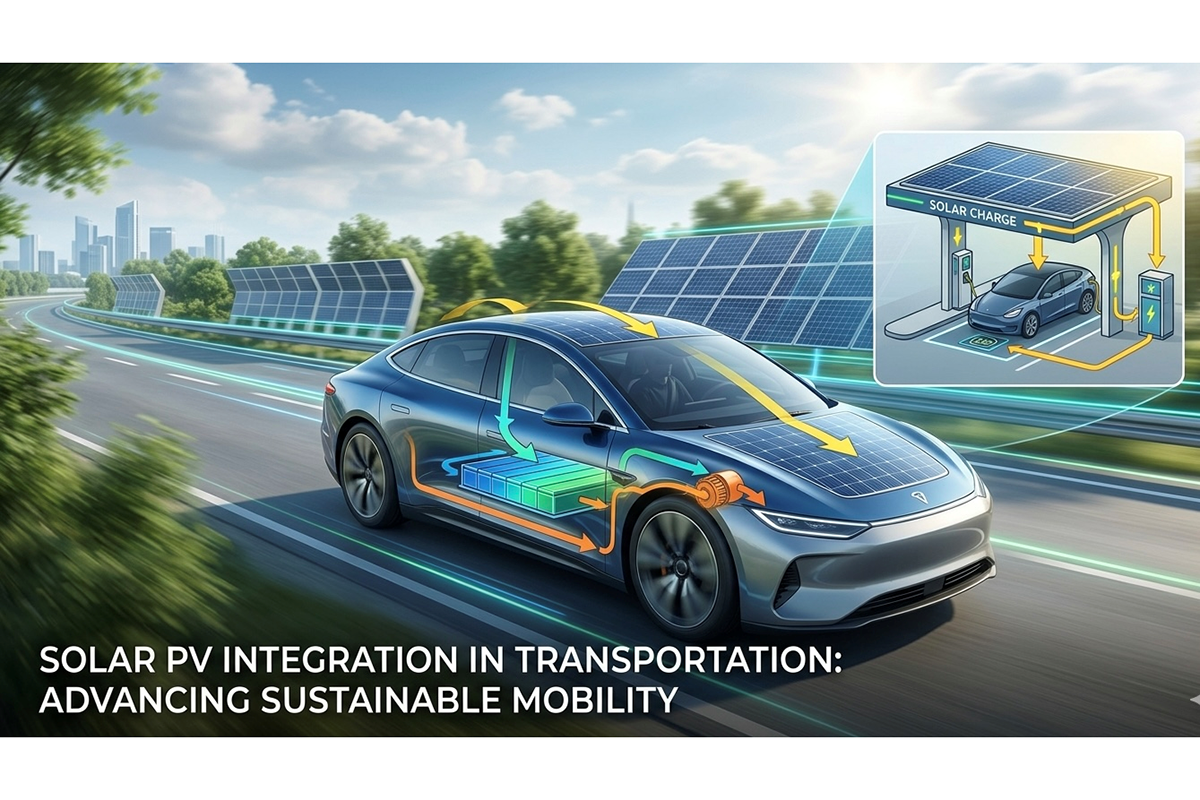
Solar PV integration in transportation: Advancing Sustainable Mobility
Project Details
- Student(s): Jason Abi Zeid
- Advisor(s): Dr. Jimmy Issa and Dr. Pierre Rahme
- Department: Industrial & Mechanical
- Academic Year(s): 2025-2026
Abstract
The transportation sector is a major contributor to global greenhouse gas emissions, driving the urgent need for sustainable and energy-efficient alternatives. This research explores the integration of solar photovoltaic (PV) technology into transportation systems as a clean and innovative solution to reduce dependence on fossil fuels. The study investigates the feasibility, performance, and potential impact of solar-assisted mobility, focusing on both vehicle-integrated PV systems and solar-powered charging infrastructure.
Through analytical modeling and case-based evaluation, the research examines how solar energy can contribute to extending the driving range of electric vehicles, reducing grid reliance, and lowering overall emissions. Key factors such as solar irradiance, panel efficiency, available surface area, and energy demand are assessed to determine the viability of solar PV in real-world transportation scenarios. Particular attention is given to regions with high solar potential, where the integration of PV technology can be especially advantageous.
The findings highlight both the opportunities and limitations of current solar PV applications in transportation, including challenges related to energy density, intermittency, and system costs. Nevertheless, advancements in photovoltaic materials and energy storage technologies show promising potential to enhance the role of solar energy in future mobility systems. This research contributes to the growing field of sustainable transportation by providing insights into the practical implementation and optimization of solar-powered solutions.